It is a taboo to call the name of the prestigious, the elders, monks, teachers. But add "la" after their names.
When walk outside, it is a taboo to walk in the way of others, especially of the elders, monks and teachers.
When inside a room or a tent, people should not sit cross legs, legs on all sides, in particular, on the cassions of meetings, holding ceremony or greeting guests. It is a taboo to stretch their legs pointing to others, not to mention lifting one's leg on teapot, table or other objects.
It is a taboo for some one directly takes a broom from other person's hand. When one needs to hand it over to others, one must firstly throw it to the ground, then let others pick it up themselves.
It is a taboo to make a noise when crossing mountain peak, lakes, and snow mountains as it will result in rains, snows and hails.
It is a taboo to use dirty bowls or put figures on the edge of a bowl when pouring tea and wine for guests.
Don't blow whistle indoors during the night, which may draw ghosts and nocturnal spirits home.
Don't close door heavily when guests were just gone, which means the host doesn't welcome guests.
Don't spit behind others (even not on purpose). Don't clap hands behinds.
Don't place empty bucket or pack basket and so on, in the walk way of guests, or in front of them when they come in.
Don't use bowls or cups with cracks. It is believed those objects with cracks will block fortune.
Don't present worn-out hadas to guests.
People must use both hands when carrying meals, teas, wine and hand over objects to guests, the elders, the masters, the monks, teachers and officials, otherwise it is considered as ban mannered.
When people present gifts to you, you should accept with both hands. If your hands have some dirt, you should clean them before accepting to show your respect.
tags: China travel and Tibet Tours
Tuesday, March 10, 2015

Wednesday, March 4, 2015
Tibet Religious Taboos – Kowtow
Kowtow is a traditional etiquette of Tibetan, which is practiced in worshipping Buddha sculptures, pagodas and living Buddha, sometimes also for visiting the prestigious the elderly. There are three forms as kowtow of full length kowtow, short length kowtow and kowtowing with sound. It is common to find people practicing kowtows of full length and short length in Johkang Temple, the Potala Palace and other monasteries.

When practicing kowtows, people put palms together, old them higher than head. Then holding them from top of the head to forehead and keep still before chest, then bow three times and prostrate on ground with both hands parallel evenly on the ground, and practice it three times. Pious Buddhism can constantly practice full length kowtows from Sichuan, Yunnan, Qinghai, Gansu to Lhasa, with three steps one kowtow. Such a pilgrimage could last several years. When making a kowtow with sound, men, women, the old and the young all hold palms together first and bow to under the feet of Buddha, knocking the Buddha slightly by forehead, which means penitence.
tags: Tibet Tours and China travel
When practicing kowtows, people put palms together, old them higher than head. Then holding them from top of the head to forehead and keep still before chest, then bow three times and prostrate on ground with both hands parallel evenly on the ground, and practice it three times. Pious Buddhism can constantly practice full length kowtows from Sichuan, Yunnan, Qinghai, Gansu to Lhasa, with three steps one kowtow. Such a pilgrimage could last several years. When making a kowtow with sound, men, women, the old and the young all hold palms together first and bow to under the feet of Buddha, knocking the Buddha slightly by forehead, which means penitence.
tags: Tibet Tours and China travel
Sunday, March 1, 2015
Tibet Custom - Babay Birth
On the third day after a baby was born, friends and relatives would come for celebration. The celebration activity is called Pangse. Pang means cirt and se means remove so it means the activity of removing evil spirits. Urban people bring presents such as qingke barley wine, butter tea, clothings and hats and so on for new born baby. When guests come into residence, they present a hada to the mother and the baby in swaddle. They present wine and tea to the mother and carefully look at the baby, with auspicious words and prayers.
In countryside, relatives and friends bring wine, tea as well as a Danggu (bag made of lamb leather) of zanba and a block of fresh butter, which are gifts for entrance. Following the ancient tradition, countrymen congratulate the new born baby for a healthy grown-up in the future. Guests present wine and tea to the mother, later using their thumb and point finger to pinch a bit of zanba upon the new born baby's forehead. It means praying for uprising future.
Tibetan asserts, a baby once was out of mother's embryo brought many evil spirits and dirts. Through holding the ceremony, it can remove them and celebrate the baby for a healthy growing.
It is said that pang se ceremony has developed from ancient Bon's period. In some remote countryside, Tibetans piles stones up on the morning of pang se. If a baby boy was was born, a pile of white stones will stand outside of the residence's gate. If a baby girl was born, any sort of stones is appropriate to pile up. Besides, people burn aromatic branches next to the pile of stones. People who come for celebration walk right to the gate for springkling a bit of zanba in the stone piles and burn incense before coming into the host's house. It is the way the Bon practise praying for deities.
tags:Tibet Tours and China travel
In countryside, relatives and friends bring wine, tea as well as a Danggu (bag made of lamb leather) of zanba and a block of fresh butter, which are gifts for entrance. Following the ancient tradition, countrymen congratulate the new born baby for a healthy grown-up in the future. Guests present wine and tea to the mother, later using their thumb and point finger to pinch a bit of zanba upon the new born baby's forehead. It means praying for uprising future.
Tibetan asserts, a baby once was out of mother's embryo brought many evil spirits and dirts. Through holding the ceremony, it can remove them and celebrate the baby for a healthy growing.
It is said that pang se ceremony has developed from ancient Bon's period. In some remote countryside, Tibetans piles stones up on the morning of pang se. If a baby boy was was born, a pile of white stones will stand outside of the residence's gate. If a baby girl was born, any sort of stones is appropriate to pile up. Besides, people burn aromatic branches next to the pile of stones. People who come for celebration walk right to the gate for springkling a bit of zanba in the stone piles and burn incense before coming into the host's house. It is the way the Bon practise praying for deities.
tags:Tibet Tours and China travel
Wednesday, February 25, 2015
Explore the beauty of Dazhuke River Marshes in Tibet
Dazhuke River Marshes are including the middle reaches of the Yarlungzangbo River, the belt with the gentle stream velocity, a broad stretch of the river beach and marshes as well as vast stretches of the surrounding farmland. Dazhuke River Marshes could be one of the important wintering grounds and other migratory waterfowls in Tibet (you can consider Tibet Tours).
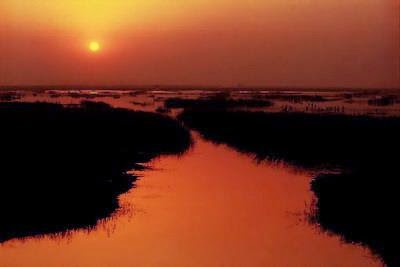 Dazhuke River Marshes is located in the Tibet Autonomous Region, about 60 kilometers to the eastern part of Xigaze as Tibet's second largest city. The area of Dazhuke River Marshes is about 16,000 hectares, with the altitude of 3,600 metres above sea level. This region contains areas which are primarily covered with wet meadow and the alpine cold meadow. Its land uses are mainly herding cattle and agriculture.
If you take a walk through a marsh in winter and the place will reveal birds' summer nesting ground nesting ground by the dozens. The wetland is also called as marshes, which is connected with the land and water. Some of the wetlands are covered and immersed with the water all year round. Some of them are dried up for weeks or months during one year.
Many plants like tall rush, the reeds and cattails are generally growing in the wetland. Wetland was such kind of place that was not quite the land, nor yet the water, which was the special dual characteristics of a wetland. Wetland with the special ecosystem structure and function, was considered as the important ecosystem on earth, and was named the "the kidney of the earth."
Dazhuke River Marshes had the altitude of 3600 meters above sea level. Dazhuke River Integrated Nature Landscape Protect Region is located in the Yarlung Zangbo River Valley, which belongs to the vast prairie region of the Qinghai-Xizang plateau. To the south of Dazhuke River Marshes is the separation of the lofty mountains and rivers, with the high and precipitous mountains, while the northern face of Dazhuke River Marshes (consider it for your China tour deals) is somewhat flat.
There had developed numerous rivers that flow into the Yarlung Zangbo River from north to south. Owning to the flat valley and the sluggish stream, the riverbed is swinging frequently. The lowest parts of the flood plain may form "back-swamps." The fluviatile flood-plain and the old riverbed on each bank of the river as well as a swampy stretch of lowlands had developed the swamps.
Large areas of the surface near the Dazhuke River Marshes are the alluvial deposits. The water supply of the swamps is mainly the water of the river. The main soil types are meadow swamping, followed by swamping meadow soil. The swamps with mild weather are as flat as a pancake, which is very suitable for growing and developing the crops.
Dazhuke River Marshes
People had opened up a great number of farmland near the swamps. In the fringes of the swamps and high land had the moistened surface and the seasonal backwater section where had developed the swamping meadow. The swamps area is rich in the waterfowls, with more plentiful wading black-necked cranes.
tags: Tour China
If you take a walk through a marsh in winter and the place will reveal birds' summer nesting ground nesting ground by the dozens. The wetland is also called as marshes, which is connected with the land and water. Some of the wetlands are covered and immersed with the water all year round. Some of them are dried up for weeks or months during one year.
Many plants like tall rush, the reeds and cattails are generally growing in the wetland. Wetland was such kind of place that was not quite the land, nor yet the water, which was the special dual characteristics of a wetland. Wetland with the special ecosystem structure and function, was considered as the important ecosystem on earth, and was named the "the kidney of the earth."
Dazhuke River Marshes had the altitude of 3600 meters above sea level. Dazhuke River Integrated Nature Landscape Protect Region is located in the Yarlung Zangbo River Valley, which belongs to the vast prairie region of the Qinghai-Xizang plateau. To the south of Dazhuke River Marshes is the separation of the lofty mountains and rivers, with the high and precipitous mountains, while the northern face of Dazhuke River Marshes (consider it for your China tour deals) is somewhat flat.
There had developed numerous rivers that flow into the Yarlung Zangbo River from north to south. Owning to the flat valley and the sluggish stream, the riverbed is swinging frequently. The lowest parts of the flood plain may form "back-swamps." The fluviatile flood-plain and the old riverbed on each bank of the river as well as a swampy stretch of lowlands had developed the swamps.
Large areas of the surface near the Dazhuke River Marshes are the alluvial deposits. The water supply of the swamps is mainly the water of the river. The main soil types are meadow swamping, followed by swamping meadow soil. The swamps with mild weather are as flat as a pancake, which is very suitable for growing and developing the crops.
Dazhuke River Marshes
People had opened up a great number of farmland near the swamps. In the fringes of the swamps and high land had the moistened surface and the seasonal backwater section where had developed the swamping meadow. The swamps area is rich in the waterfowls, with more plentiful wading black-necked cranes.
tags: Tour China
Sunday, February 8, 2015
Get to know Unique Marriage Customs of Sanjiang Dong Minority during Chinese New Year
Sanjiang Dong Autonomous County is situated in north of Guangxi Zhuang Autonomous Region. It has several traditional Dong minority villages and is home to the largest population of Dong people in China. The beautiful natural scenery and rich folk customs have made Sanjiang County a hot tourist spot to get to know the Dong ethnic group. Dong featured attractions of wind and rain bridges, drum towers, and houses are commonly seen. What’s more interesting are the rich folk customs and various festivals local Dong people have China tour deals.
Festivals of the Dong minority like Duoye Festival, Firecracker’s Festival, and Bullfight Festival are very popular. Also there are many customs that are unique and interesting, especially those customs that Dong people have when celebrating the Chinese New Year. During the Chinese New Year, what attracts people most is the marriage custom which has become a major attraction for tourists due to its grand scene and unique rituals.
Most of the young people of Dong minority marry during the Chinese New Year. A marriage usually starts with the mysterious “steal bride marriage” when the groom invite several close friends to visit the bride’s house and ‘steal’ the bride back to his home at Chinese New Year Eve. Then the groom and bride will have their wedding at the second day of Chinese New Year.
The highlight of the local marriage custom comes the third day of Chinese New Year. It is called Huimen and it is the grandest ceremony of a Dong wedding. Huimen means escorting the bride return to her mother’s home at the next day of the wedding. During Huimen, the groom is not allowed to accompany the bride but his relatives and friends will carry wedding gifts like sour fish, sour pork, sour duck, sticky rice and other local food to escort the bride and parade to her parents’ home. The bride will walk behind of the group with a cloth in her hand so that people could recognize her as the bride. The bridesmaid is a girl from the groom’s village but she is not allowed to enter the bride’s parents’ home when they arrived and has to go back home immediately China tour packages.
On the way to the bride’s parent’s home, the group usually choose routes where have many people. Every village they pass through, they will set off firecrackers to show good luck. When arrived, the bride’s parents will make tea for every guests, which is called wedding tea. In the evening, an activity called ‘Zuoye’ will be held when the unmarried youth from both the groom’s and bride’s village sitting together to chat and see if they will find their future partners.
The Chengyang Scenic Area that has the famous Chengyang Wind and Rain Bridge is renowned for the group wedding held during the Chinese New Year. When there are more than 50 brides parading to their parents’ home with a large crowd of people, the scene is really exciting and interesting.
Besides the marriage custom, Dong people also have many other activities to celebrate the Chinese New Year. The “Thieves Driving Festival”, Lusheng Singing Competition, and Hundred-Family Banquet are very popular activities during the Chinese New Year. To get to know and experience the unique folk customs of Dong Minority, do not miss the opportunity to Sanjiang during Chinese New Year.
tags: Tour of China
Festivals of the Dong minority like Duoye Festival, Firecracker’s Festival, and Bullfight Festival are very popular. Also there are many customs that are unique and interesting, especially those customs that Dong people have when celebrating the Chinese New Year. During the Chinese New Year, what attracts people most is the marriage custom which has become a major attraction for tourists due to its grand scene and unique rituals.
Most of the young people of Dong minority marry during the Chinese New Year. A marriage usually starts with the mysterious “steal bride marriage” when the groom invite several close friends to visit the bride’s house and ‘steal’ the bride back to his home at Chinese New Year Eve. Then the groom and bride will have their wedding at the second day of Chinese New Year.
The highlight of the local marriage custom comes the third day of Chinese New Year. It is called Huimen and it is the grandest ceremony of a Dong wedding. Huimen means escorting the bride return to her mother’s home at the next day of the wedding. During Huimen, the groom is not allowed to accompany the bride but his relatives and friends will carry wedding gifts like sour fish, sour pork, sour duck, sticky rice and other local food to escort the bride and parade to her parents’ home. The bride will walk behind of the group with a cloth in her hand so that people could recognize her as the bride. The bridesmaid is a girl from the groom’s village but she is not allowed to enter the bride’s parents’ home when they arrived and has to go back home immediately China tour packages.
On the way to the bride’s parent’s home, the group usually choose routes where have many people. Every village they pass through, they will set off firecrackers to show good luck. When arrived, the bride’s parents will make tea for every guests, which is called wedding tea. In the evening, an activity called ‘Zuoye’ will be held when the unmarried youth from both the groom’s and bride’s village sitting together to chat and see if they will find their future partners.
The Chengyang Scenic Area that has the famous Chengyang Wind and Rain Bridge is renowned for the group wedding held during the Chinese New Year. When there are more than 50 brides parading to their parents’ home with a large crowd of people, the scene is really exciting and interesting.
Besides the marriage custom, Dong people also have many other activities to celebrate the Chinese New Year. The “Thieves Driving Festival”, Lusheng Singing Competition, and Hundred-Family Banquet are very popular activities during the Chinese New Year. To get to know and experience the unique folk customs of Dong Minority, do not miss the opportunity to Sanjiang during Chinese New Year.
tags: Tour of China
Monday, February 2, 2015
Culture insider: Prettiest Chinese combs
An ivory comb from the Dawenkou culture was discovered in Tai'an, Shandong province Luxury China tour packages, in 1959. The Dawenkou culture (4300-2500 BC) lived in the late Neolithic period of Shandong province, China.
In ancient China China Travel Destinations, hair was called "threadlike things of troubles". Thus Buddhist monks shave their heads completely. Combs arrange hair, so people regard them as a way to clear their troubled minds. Combs also mean "smooth and prosper", therefore combs represent people's good wishes.
As one of the traditional handicrafts in China, the Chinese comb has a history over thousands of years. In Chinese, combs are also called "Shubi", which includes "Shu" (comb) and "Bi"(fine-toothed comb China business tour).
Mainly made from bamboo, wood and animal bones, with the development of society, the combs are decorated in various ways, and feature colorful patterns and pictures of historical figures, landscapes, birds, animals, opera characters and so forth.
tags: Tour in China
*#@faaert&%&
In ancient China China Travel Destinations, hair was called "threadlike things of troubles". Thus Buddhist monks shave their heads completely. Combs arrange hair, so people regard them as a way to clear their troubled minds. Combs also mean "smooth and prosper", therefore combs represent people's good wishes.
As one of the traditional handicrafts in China, the Chinese comb has a history over thousands of years. In Chinese, combs are also called "Shubi", which includes "Shu" (comb) and "Bi"(fine-toothed comb China business tour).
Mainly made from bamboo, wood and animal bones, with the development of society, the combs are decorated in various ways, and feature colorful patterns and pictures of historical figures, landscapes, birds, animals, opera characters and so forth.
tags: Tour in China
*#@faaert&%&
Xian Travel Destination - Huaqing Palace Heritage Site
If you are very interested in the history of China, especially about
how the emperors lived their lives, come to Xian. As the ancient capital
of six dynasties in ancient China, this is the perfect place to explore
the history of China. Huaqing Chi, also known as the Huaqing Pools or
also known as Huaqing Palace.
As the treasure land in ancient times, it has enjoyed a very high prestige for thousand years. Emperors from different dynasties all took Huaqing palace as their leisure place, they spared no effort to build spectacular palace or hot spring place here. According to the ancient literature and some evidence from archaeologists, Huaqing palace has a history of 6000 years on hot spring and 3,000 years on royal palace construction.
Huaqing Palace (an optional destination for affordable China tours) make the best of the landscape during the construction, with hot spring palace as its center, plus pines trees forests and pavilions with different uses, Lichi garden, Pear garden, Eastern garden and others, forming a most spectacular palace construction group in ancient China. Many famous ancient Chinese poets also mentioned the beauty of Huaqing palace in their poems. In winter, they would use the circulation of hot spring water inside the wall to keep warm, when it snowed the snowflakes would turn into frost once it fell onto the wall, therefor it's also called the Flying Frost Palace.
On the front gate of Huaqing Palace, there is a plank board with its name, written by a famous Chinese poet called Guo Moruo. Stepping inside, two tall pine trees come into the sight, with two palace-like buildings sitting on both sides. On its back there is Nine Dragon Lake.The water is smooth and clear, with the shadows from the pavilion on the shore, looking all beautiful and peaceful.
One of the highlights of Huaqing Palace is the bathing pools, each of them are carefully designed for different uses. Lotus Pool is for an emperor called Xuanzong in Tang dynasty, covering an area of 400 square meters. At the bottom, there is a pair of 30cm long water inlet with the shape of lotus, symbolizing the love of the emperor and his concubine. How romantic is that during your China travel! Firstly built in 747 A.D, Begonia Pool is also called High-ranking concubine pool, with the shape of a begonia flower in full blossom . It was built for the favorite concubine of the emperor called Yang Guifei.
If you think the Pear Garden is a garden full of pear trees, you are way wrong. As a matter of fact, Pear Garden(Li yuan) is a traditional Chinese opera house (consider it for your China Holidays). It is also the first imperial music and art school in ancient China. At the best times of Tang Dynasty, emperor Xuanzong loved to watching operas and imperial dancing here. He was also good at music, together with Yang Guifei, they created a ton of nice songs.
As the treasure land in ancient times, it has enjoyed a very high prestige for thousand years. Emperors from different dynasties all took Huaqing palace as their leisure place, they spared no effort to build spectacular palace or hot spring place here. According to the ancient literature and some evidence from archaeologists, Huaqing palace has a history of 6000 years on hot spring and 3,000 years on royal palace construction.
Huaqing Palace (an optional destination for affordable China tours) make the best of the landscape during the construction, with hot spring palace as its center, plus pines trees forests and pavilions with different uses, Lichi garden, Pear garden, Eastern garden and others, forming a most spectacular palace construction group in ancient China. Many famous ancient Chinese poets also mentioned the beauty of Huaqing palace in their poems. In winter, they would use the circulation of hot spring water inside the wall to keep warm, when it snowed the snowflakes would turn into frost once it fell onto the wall, therefor it's also called the Flying Frost Palace.
On the front gate of Huaqing Palace, there is a plank board with its name, written by a famous Chinese poet called Guo Moruo. Stepping inside, two tall pine trees come into the sight, with two palace-like buildings sitting on both sides. On its back there is Nine Dragon Lake.The water is smooth and clear, with the shadows from the pavilion on the shore, looking all beautiful and peaceful.
One of the highlights of Huaqing Palace is the bathing pools, each of them are carefully designed for different uses. Lotus Pool is for an emperor called Xuanzong in Tang dynasty, covering an area of 400 square meters. At the bottom, there is a pair of 30cm long water inlet with the shape of lotus, symbolizing the love of the emperor and his concubine. How romantic is that during your China travel! Firstly built in 747 A.D, Begonia Pool is also called High-ranking concubine pool, with the shape of a begonia flower in full blossom . It was built for the favorite concubine of the emperor called Yang Guifei.
If you think the Pear Garden is a garden full of pear trees, you are way wrong. As a matter of fact, Pear Garden(Li yuan) is a traditional Chinese opera house (consider it for your China Holidays). It is also the first imperial music and art school in ancient China. At the best times of Tang Dynasty, emperor Xuanzong loved to watching operas and imperial dancing here. He was also good at music, together with Yang Guifei, they created a ton of nice songs.
Subscribe to:
Posts (Atom)