Saturday, February 16, 2013

Misterious Gaochang Ancient City

Gaochang Ancient City is one attraction when you have a Silk Road tour. The following will give you some information of Gaochang.
Gaochang is the site of an ancient oasis city built on the northern rim of the inhospitable Taklamakan Desert in Xinjiang of China. Gaochang in Uigur means the “city of King”. Gaochang ancient city once was the capital of Gaochang Kingdom (442 AD-460AD). As a busy trading center, it is a stopping point for merchant traders traveling on the Silk Road.
image
The ruins of Gaochang ancient city that was first built in 460 AD lie about 40 kilometers east of the Turpan County. Although a ghost town for over 1,000 years, the ruins of the former palaces are still there to be seen. Gaochang ancient city takes the shape of the rectangle with the triple enclosing walls including the inner, outer and the palace city.
The outer wall built with rammed earth is about 11.5 meters high. In the southwest of city is a temple with an area of over ten thousand square meters. It consists of courtyards, teaching hall, sutra depository and monks’ dormitory. Through analysis of architectural features and remnants of murals, the temple was built about in the 6th century. By the shadow of the temple are the ruins of streets and markets. In the inner city, there is an irregular square tower-like castle which is called as Khan Castle by the local. In the north of castle is a square tower-shaped building with 15 meters in height. To the west is double-floored construction with the first floor is under the ground. This construction is shaped like unearthed government office of Tang Dynasty so it once might be a palace. The whole city has nine city gates and northern wall is the best-preserved. In the north of Gaochang city is a vast gobi desert region. The habitants of the city were buried in gobi desert after they died. Occupying an area of over ten square kilometers, the whole area of tombs stretches from the northeast of city to the northwest. The Gaochang city was abandoned by people in the war of the end of the 13th century. For tourists, the view in the relic city is different from that of Yangtze River Cruise.
image
Gaochang was the pivot point for Central Asia and Europe of merchandise. Many ancient religions of the world were introduced into the mainland through Gaochang. It is no exaggeration to say that Gaochang ancient city once was the most active and developed religious region.
The city was brought under the protection of the state in 1961.
Gaochang is not a hot tourist attraction of China tours. But when you plan to have a Silk Road adventure, this place should not be missed.

Confucius - A key to understanding the Chinese Mind

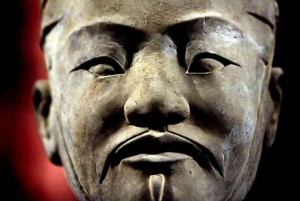
You may remember that the 2008 Olympic opening ceremony kicked off with a quote from Confucius—an adage that it’s a great pleasure to have friends come to visit from afar. Later we also saw three thousand performers -–dressed as Confucius’ disciples—parade through the Bird’s Nest Stadium. Clearly, the Chinese like this guy.

To understand the Chinese mind, you need to start with Confucius (552-479BC). Arguably the most influential person in Chinese history, Confucius and his teachings continue to exert a deep influence on society even in modern China today. If you are confused with deeds of Chinese when you have had tailor-made China tours, you should learn something about Confucius.
SO WHO WAS THIS CONFUCIUS DUDE ANYWAY?
First, what Confucianism is not. Though many temples were built in his honor, it’s not a religion in the Western sense. There’s no god. Nor are there priests, shrines or churches. You won’t find people running around calling themselves a Confucianist.

In fact, he was mostly silent on the afterlife (though over the centuries his teachings were melded with Daoist and Buddhist tenets and rituals). His attitude on the subject is perhaps best summed up in his statement: “If you are not able to serve men, how can you worship the gods?”
Instead, he was more of a statesman and philosopher. Confucius lived during a time of great chaos and conflict, known as the Spring and Autumn era. The great question of the day was: “What’s the best way to order society and government?”
In a nutshell, Confucianism is a complex system of social and political ethics based on filial piety, kinship, loyalty and righteousness. His teachings covers a wide range—from how a “true gentleman” should behaves in his daily life (down to how he eats with proper decorum) to how a ruler should govern (with a benevolent concern for the well-being of his subjects).
In other words, it’s a kind of moral guide and prescription for good government— one that values hierarchy, group orientation, and respect for age and tradition. But the Confucian system is based on a practical kind of morality—you won’t find any abstract principles of “good” and “evil”.
The “inscrutable” Chinese?
This respect for authority and hierarchy helps explain why Westerners have long complained that the Chinese are “inscrutable” (or worse, devious). In contrast to Western cultures—which encourage individual expression—Chinese culture encourages more of a “poker face”.
In other words, in a Confucian society, you’re supposed to act according to your rank… and not necessarily by how you feel. In the interest of social harmony, it was important to behave with reverence and obedience according to your rank. Indeed, it was not just the polite thing to do in traditional Chinese society. Saying the wrong thing to the emperor or a powerful official could literally cost you your life.

"I feel your pain."
Even in modern China today, this cultural tendency to retain a more neutral public face still endures—especially in work situations when dealing with those in authority (including customers).

So whether dealing with your China tour operator or hotel manager, don’t simply assume that they’re being evasive or uncaring just because they don’t seem to be mirroring your concerned expression when things go wrong.
On the other hand, that blank look on their face may also mean, “What the hell is this big nosed Whitey talking about? I wonder what’s for lunch in the cafeteria today?”

Thursday, February 7, 2013

Chinese Tea Culture

Chinese tea culture refers to the methods of preparation of tea and equipment used to make tea. Many tourists like to visit the local teahouses if they have a China tour.
Chinese people have the habit of drinking tea daily. With a long history and a profundity for its variety, Chinese tea culture is in large measure different from that of Europe, America and Japan. Chinese tea culture not only pay attention to material comforts but also the spirit pleasure. Chinese tea culture has deeply penetrated into many fields such as poems, painting, calligraphy, religion and Chinese traditional medicine.
China, the hometown of tea, is the first country which discovered, cultivated and drank tea in the world. China has tea-shrubs as early as five to six thousand years ago, and human cultivation of tea plants date back to two thousand years. Chinese tea became world-famous about one thousand years ago. According to historical documents, tea initially referred to edible bitter plants during primitive time. The name of tea especially had been referred to a kind of plant since discovery of some other values of tea.
When did Chinese people begin to drink tea? As for this question, there are many different versions. The matter of drinking tea was recorded in Western Han Dynasty. But the beginning of drinking tea should be earlier and the Chinese tea culture started in 420AD.

The Chinese tea can be classified into five types according to different methods which they are processed, which includes green tea, black tea, Wulong tea, scented tea and yellow tea. Green tea keeps the original color of the tea leaves without fermentation. Green tea contains kinds of biochemical materials which is good for health. It helps to refresh, improve digestion and dissolve phlegm. Compared with green tea, black tea, called red tea in China, is completely fermented before baking. The black tea can nourish stomach. Black tea with milk plays an effective role in curing stomach ulcer. Wulong tea is made by partial fermentation. Wulong tea takes a pharmacological action of dissolve fat into the watery contents so that it is nicknamed “beauty-slimming tea”. The scented tea is made by mixing fragrant flower with tea leaves in the course of processing. The northern people of China are in favor of scented tea. Now, the dried flowers after processing without tea leaves are also called scented tea. Yellow tea, as the name suggests, is featured with yellow leaves and takes on yellow after infusion.
The teahouses in Chengdu are very famous. If you plan to join China travel packages to Chengdu, remember to enter the local teahouse.

Wednesday, February 6, 2013

Facts of Guilin and Li River Cruise

Guilin has the good fortune being located in one of China’s most beautiful landscapes and one of China’s best tourist city which is important for China tourism. Surrounded by stunning karst peaks that dramatically jut up from the ground, the city is a popular Chinese tourist destination (but somewhat underrated in guidebooks). Formed some 200 million years ago when the area was below sea level, the jagged green hills give Guilin a hypnotic, otherworldly vibe.

Staying true to modern Chinese construction, Guilin’s architecture— rebuilt in the functional style popular in 1950s after Japanese bombing—is rather colorless. But the city has some worthy natural monuments and about 10 pleasant parks featuring the striking peaks and limestone caves.
But to me, the city alone isn’t attractive enough to warrant a strong recommendation as a tourist destination. Instead, Guilin’s main attraction is its position as the starting point for a cruise down the Li River to the (once) sleepy, backpacker town of Yangshuo which are always contained in popular China travel package.

In fact, the Li River cruise is the highlight of trip to China for some travelers. If I had to choose one, I’d recommend the Li River cruise over the one down the Yangtze River (especially after the Three Gorges Dam turned the once narrow, rapid river into a large, placid lake).
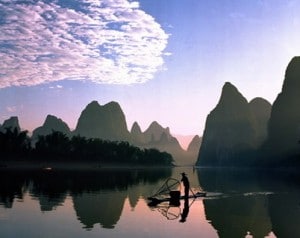
A photographer’s dream, the cruise down the shallow green water passes through a never-ending procession of gorgeous karst peaks that the elements have carved into all kinds of bizarre shapes. And in between, you’ll pass by landscape straight out of Chinese scroll painting: rural scenes of fishermen on narrow bamboo raft and farmers in conical hats working the fields with water buffalo.

Although no longer the unspoiled mellow town of past decades, Yangshuo is still a strongly recommended and very worthy destination. Today, the small town offers a wide range of trendy souvenir shops, bars, cafes, and restaurants catering to western and Asian tourists. These days you can find anything from reggae to hip hop and pizza to pad thai noodles.
The best times to visit are spring and fall (long summers tend hot and humid, winters tend to be wet).
LI RIVER CRUISE: Li River Cruise can match Yangtze River cruises. Almost all of the cruises down the Li River leave in the morning from Zhujiang pier, a 45-minute drive from Guilin. Your best bet is to shop around a bit and book through your hotel/hostel or a travel agency.
The cruises are almost all one-way (best to take a 2-hour bus back instead of the long journey upstream). For budget travelers, the cheapest fares will be on an old ferry and run around Y250. But otherwise, expect to pay about Y400-500, which will include a ride to the pier as well as lunch. Depending on the water level, the cruise takes anywhere from 4-6 hours to make the 40-mile (60km) journey south to Yangshuo.

Ways to Apply for Tibet Travel Permit

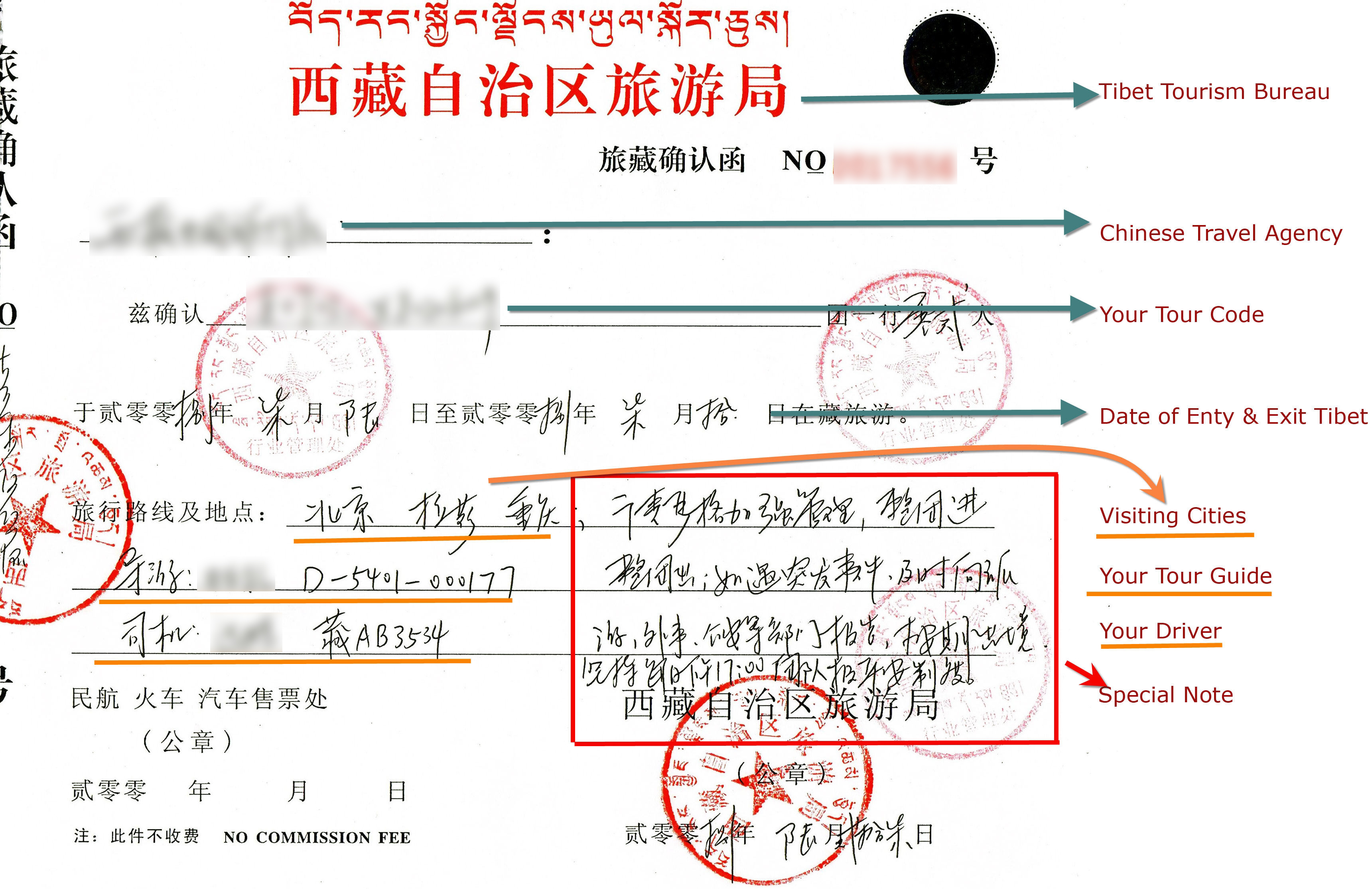
Millions of tourists outside China wants to know the question of "How do I get into Tibet when I plan a tailor-made China tours". By comparison with other places in China, Tibet has never been an easiest place to visit. Beside the obstacle of mountain roads and the lack of oxygen in the air, travel permit is another hindrance for visitors to enter Tibet. You can get the detailed info about Tibet travel permit through the following.

Visitors who want to visit Tibet need a travel permit which can help you aboard the train or flights to Lhasa. Before applying for the permit, visitors need to pre-arrange an itinerary through a tour agent. In addition, if you have a plan to visit outside Lhasa Prefecture, you have to get these places by hiring transportation and a tour guide. If you decide to get to Tibet from Nepal, you will have to travel on short-term group visa, which is hard to extend.
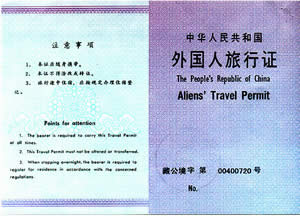
There are three kinds of permits: Tibet Tourism Bureau (TTB) Permit, Travel Permit or Aliens' Travel Permit and Military Permit. TTB permit, which is a necessity for foreign tourists to visit Lhasa or other parts of the Tibetan Autonomous Region, can only be gotten through a tour agency in Tibet (agencies outside Tibet can arrange trip, but ultimately they book through a Tibetan-based China travel agency). Aliens?ˉ travel permit which is issued by the police is needed to visit ??unopened?ˉ areas. You are asked for the passport and TTB permit and submit it to the Foreign Affairs Section of Public Security Bureau for the Aliens travel permits. Visiting sensitive border such as Mt Kailash are required to show military and a foreign-affairs permit. The Military Permit is issued by troop while the Foreign-affair's permit by Foreign affairs office in Lhasa.

But for the general foreign travelers, the most indispensable is TTB permit. To get permit you need to:
1. The photo copy of Chinese Visa and passport is a must. You can email them to the Tibetan-based agencies you choose 20 to 30 days before arriving in Lhasa. The photo copies must be in large size and clear enough. 2. You have to arrange an address in China such as hotel, guesthouse and local agency to receive your TTB permit. 3. You should work out the itinerary detailing where you want to go 4. Agree price and send deposit through Paypal or bank transfer.

By the way, if you are a journalist or embassy staff, you will find it impossible to get TTB permit., while the visitors on business matter or resident visa don't seem to have a problem.
Hope that the above-mentioned information can help you if you plan to have Tibet tours.
Source of Article: http://www.articlerich.com/Article/-Guide-for-Applying-Tibet-Travel-Permit/2543301

Tuesday, February 5, 2013

Culture behind the Spring Festival customs II

Many tourists choose to visit China during Spring Festival, although it will be very crowded. Why? they just want to learn more about Chinese culture during their China travel. Learn the below mentioned.
Pursuit of harmony
The Spring Festival represents the beginning of a new lunar year. Most Chinese people hold memorial ceremonies to warship gods and ancestors, praying for peace, prosperity and good luck in the coming year. These rituals and praying activities can be seen as the ancient Chinese people's philosophy of pursuing harmony.

Praying activities during the Spring Festival imply the ternary-structured way of thinking. Usually before the Lunar New Year's Eve dinner, the family must first hold a memorial ceremony to warship ancestors. Sacrifices are placed in front of the ancestral shrine, usually the heads of three animals such as a goat, cow and a pig.
Three bowls of cooked rice, three cups of wine, and three cups of tea must be offered and three sticks of incense will be burned during the ritual. All family members bow down three times or kowtow three times while bowing nine times. Customs associated with "three" are very common in various ethnic groups.
Such praying activities associated with "three" during the Spring Festival ritual New Year ritual, represent the ternary-structure way of thinking, which is an important part of ancient Chinese people's philosophy when it comes to pray for the harmony and unity of heaven, earth, and man, in order to find balance between heaven and earth, the human society, and all individual, but also a way so that all gods from heaven and earth will protect the country, the society, families, and individuals with good luck, happiness and good health.
The praying activities in Spring Festival rituals also imply the quinary-structure way of thinking. In ancient times, it was a tradition to welcome the gods that descended from five directions, the God of Wealth, the God of Blessings, the God of Nobleness, the God of Delight, and the Tai Sui God. In many parts of China, the tradition is still alive.
Generally, the household should open all doors and windows at midnight on the fifth of January according to Chinese lunar calendar while lighting incense sticks and setting off firecracker to welcome the five gods who will bring fortune.
All of these traditions are associated with the quinary-structure way of thinking which is based on the theory of the five elements. In this theory it is believed that the world is material and the universe is made by five basic elements (wood, fire, metal, water, and soil).
All substances in the universe can be classified in accordance with the five basic material properties. The theory is very complex but mainly believes that that the five elements counteract with one another and coexist in harmony.
Both individuals and the society must rely on the mutual balance among the five elements to maintain a state of harmony. The absence of any of these elements will result in crisis or instability.
As can be seen from these traditions and ways of thinking, Chinese Spring Festival has very colorful cultural connotations. We should cherish the wisdom of our ancestors and consciously protect and promote the Spring Festival culture which should be known before your private China tours.

Culture behind the Spring Festival customs I

The Spring Festival is most magnificent and most important festival with the greatest cultural connotation in China. There are many traditional customs during Spring Festival such as setting off firecrackers, lighting bonfires, hanging lanterns, and eating dumplings, all of which reveal the way of thinking and history of the ancient Chinese people as well as the traditional Chinese culture and philosophy. Before your China tours during Spring Festival, you should know these customs.

Compliance with nature's laws
Spring Festival usually comes shortly before or after one of the twenty four solar terms called the "Beginning of Spring". It marks the beginning of the four seasons in a year as well as a time of renewal and nature's resurrection.
According to traditional Chinese calendar, the Spring Festival is truly the beginning of the New Year and new season not only in terms of timing but also in terms of climate. Yin-Yang opposition is an important aspect ancient Chinese people's thinking.
During the Spring Festival, many fire-related matters have something to do with this concept of adjustment between Yin and Yang. For example, every household will light torches and bonfires in their courtyards in Lunar New Year's Eve to pray for prosperity; and they will all ignite the "ever-burning light" not to be blown out throughout the night, as a way to pray for longevity and well-being. Burning firecrackers is a tradition followed to "ring out the old year and ring in the new". Initially it was also a sun-worship act but later it gained the connotation of driving out evil and fouling spirits as well as welcoming good gods.
Finding balance
Most traditional Chinese festivals are celebrated with special dishes which reveal the way of thinking of ancient Chinese trying to find balance. In the eyes of ancient Chinese people, each food is produced with two kinds of substances respectively attributed with Yin and Yang properties. Foods eaten in different seasons symbolize harmony in their own ways. Only by sacrificing foods consistent of Yin and Yang properties, the ritual will bring harmony between man and nature; and only by eating foods symbolizing a balance between Yin and Yang, people will enjoy peace and prosperity.
The symbolic dishes during the Spring Festival such as dumplings, rice cakes, and rice glue balls all represent the combination of Yin and Yang. For example, a dumpling is the combination of pasta, which has Yin properties, and the stuffing, which has Yang properties. The exterior appearance of a dumpling is like the crescent moon, while the stuffing inside is round and symbolizes the sun. Their combination symbolizes the conjunction of Yin and Yang.
If you need more info about the Spring Festival, you can ask China travel agents.